Do you find yourself searching for resources around When Should You Replace Your Hot Water Heater??
Occasionally, the lag in your heating system is simply an outcome of bathing excessive or doing loads of laundry. There are circumstances when your tools requires dealing with so you can proceed taking pleasure in warm water. Don't wait for busted water heaters to give you a large migraine at the peak of winter.
Instead, find out the indication that suggest your water heater gets on its last leg prior to it totally conks out. When you notice these 6 warnings, call your plumber to do repair work before your machine entirely falls short and leaks all over.
Listening To Strange Sounds
When unusual seem like tapping and also knocking on your device, this indicates debris build-up. It is akin to stratified rocks, which are difficult as well as make a lot of sound when banging against metal. If left ignored, these pieces can develop tears on the metal, creating leakages.
Thankfully, you can still save your water heater by draining it and cleansing it. Just take care because taking care of this is dangerous, whether it is a gas or electric system. Put on goggles, gloves, and also protective garments. Most of all, see to it you know what you're doing. Or else, it is far better to call an expert.
Making Insufficient Hot Water
If there is not enough warm water for you and your household, yet you have not changed your usage behaviors, then that's the sign that your hot water heater is falling short. Usually, growing households and also an additional bathroom show that you need to scale up to a larger device to meet your needs.
When everything is the very same, yet your water heater suddenly doesn't meet your hot water needs, consider a professional inspection because your equipment is not carrying out to standard.
Experiencing Fluctuations in Temperature
Your water heating unit has a thermostat, and also the water generated must stay around that very same temperature level you establish for the system. If your water becomes as well hot or also chilly all of an abrupt, it might mean that your water heating system thermostat is no longer doing its task.
Seeing Puddles as well as leaks
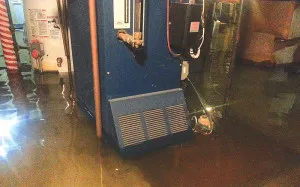
Check to screws, pipelines, and also ports when you see a water leakage. You may simply require to tighten a few of them. Nonetheless, if you see puddles gathered at the end of the heating system, you have to call for an instant evaluation since it reveals you have actually got an active leakage that could be an issue with your tank itself or the pipelines.
Discovering Odiferous or cloudy Water
Does your water unexpectedly have an odor like rotten eggs and look filthy? Your water heating unit can be acting up if you scent something unusual. Your water should be clean and fresh smelling as before. If not, you could have rust build-up and bacteria contamination. It implies the built-in anode rod in your device is no longer doing its job, so you need it replaced stat.
Aging Beyond Requirement Life Expectancy
You have to think about changing it if your water heating system is more than 10 years old. That's the natural life-span of this equipment! With correct maintenance, you can extend it for a few even more years. On the other hand, without a routine tune-up, the life-span can be much shorter. You may consider water heater replacement if you understand your water heater is old, paired with the various other problems pointed out over.
Don't wait for busted water heating units to give you a large headache at the height of winter.
Your water heating system has a thermostat, and also the water created should remain around that same temperature you set for the device. If your water ends up being too warm or as well chilly all of an unexpected, it can imply that your water heating system thermostat is no longer doing its work. If your water heating unit is even more than ten years old, you need to consider changing it. You may take into consideration water heating system replacement if you know your water heating unit is old, paired with the other problems mentioned above.
How to handle a broken Water Heater
Imagine planning a nice warm bath after a cold day only to find it broken when you get home. Water heaters are a home staple, especially during the freezing winter days. So, what happens when the water heater breaks? You have to deal with ice-cold water for bathing and dishwashing the whole time. Read on so you’ll know what to do when it happens.
How Does a Water Heater Work?
There are two kinds of water heaters – tank-type and tankless water heaters. Both types convert energy to heat the water and distribute it around your household. Their difference lies in the process, volume, and water storage. It’s up to your lifestyle, which one will be best for your home.
Tank-type Hot Water Heater
As its name says, tank-type water heaters have tanks when you install them. They are perfect for large families since they can store and distribute a lot of heated water. It usually uses fuel or electricity to start heating the water. Tank-type heaters use three pipes to transfer the water. The cold water pipe transports moisture to the bottom of the tank to be heated. As it warms up, it is distributed by the hot water pipe on demand. The safety valve pipe keeps the water heater safe if the temperature and pressure go too high. The heated water is stored in the tank and is continuously heated even when not in use.
Tankless Hot Water Heater
Tankless water heaters, on the other hand, are compact and energy-efficient. It heats water on demand rather than storing and continuing to heat it. Tankless heaters either use heat exchanger coils or gas to heat cold water.
Water Heater Age
Standard heaters last for only about eight to twelve years. The wear and tear will eventually slow down the healing process and will cause higher electricity and fuel consumption. Check the serial number to see your heater’s manufacturing date.
Sediment Build-Up
The commercial hard water contains minerals that get deposited at the bottom of the tank. The minerals create a layer at the burner which insulates the water being heated. This causes the burner to overheat and weaken the tank.
Internal Pressure
As a keen reader on Early Signs of Water Heater Failure, I think sharing that piece of writing was really helpful. Make sure you take the time to distribute this blog if you liked it. Thanks a lot for your time. Don't hesitate to check our site back soon.
Rapid response assured.